David Stephens
Artist info

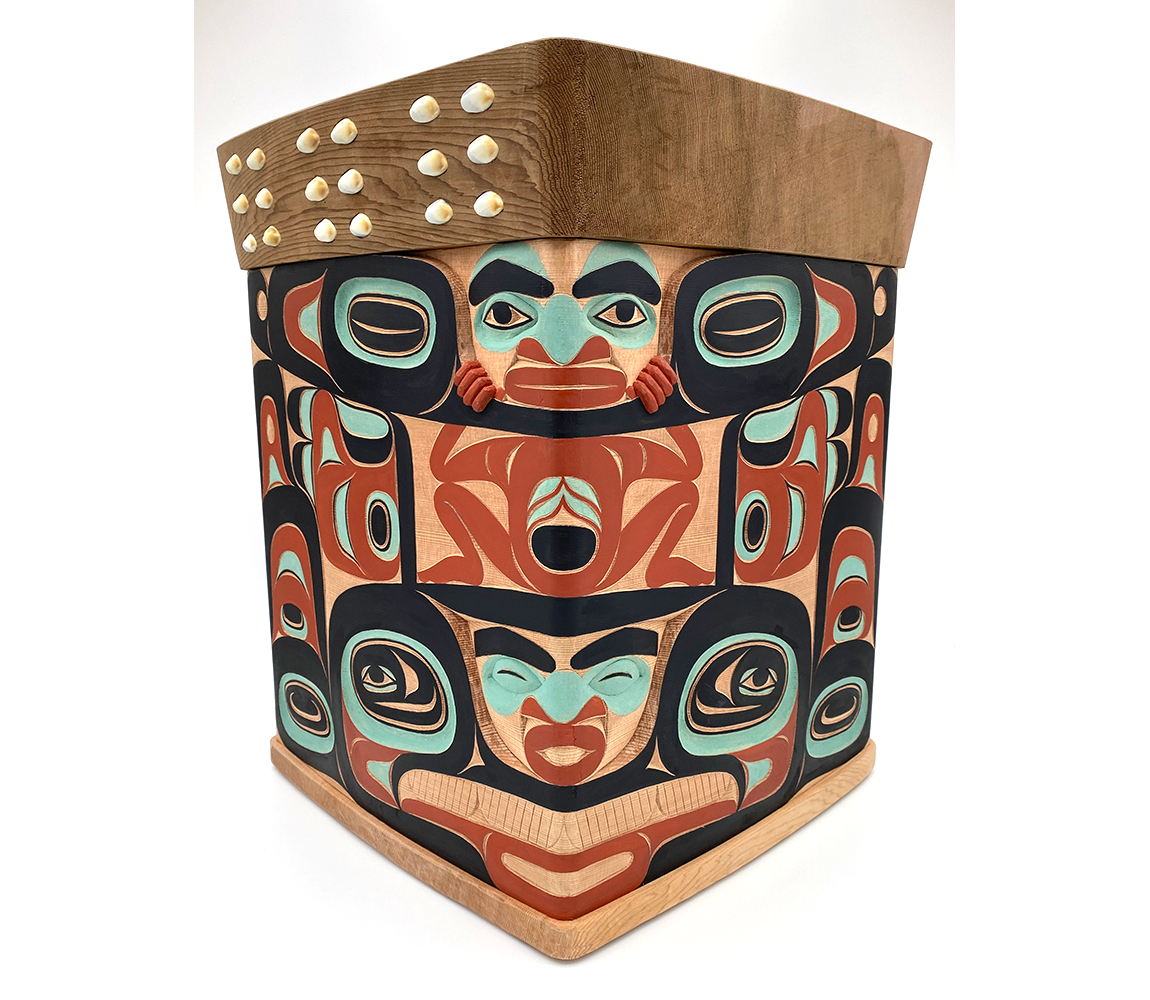
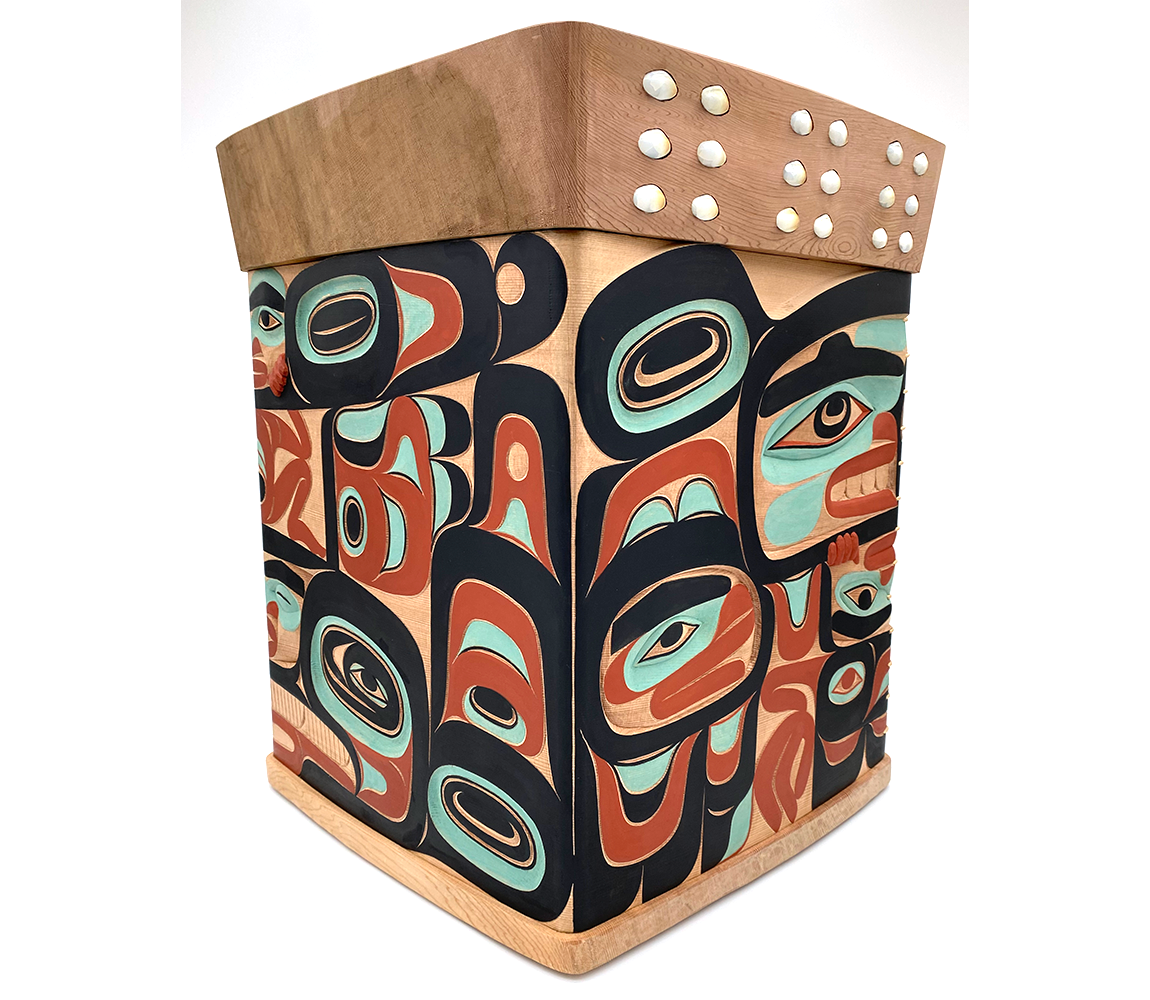
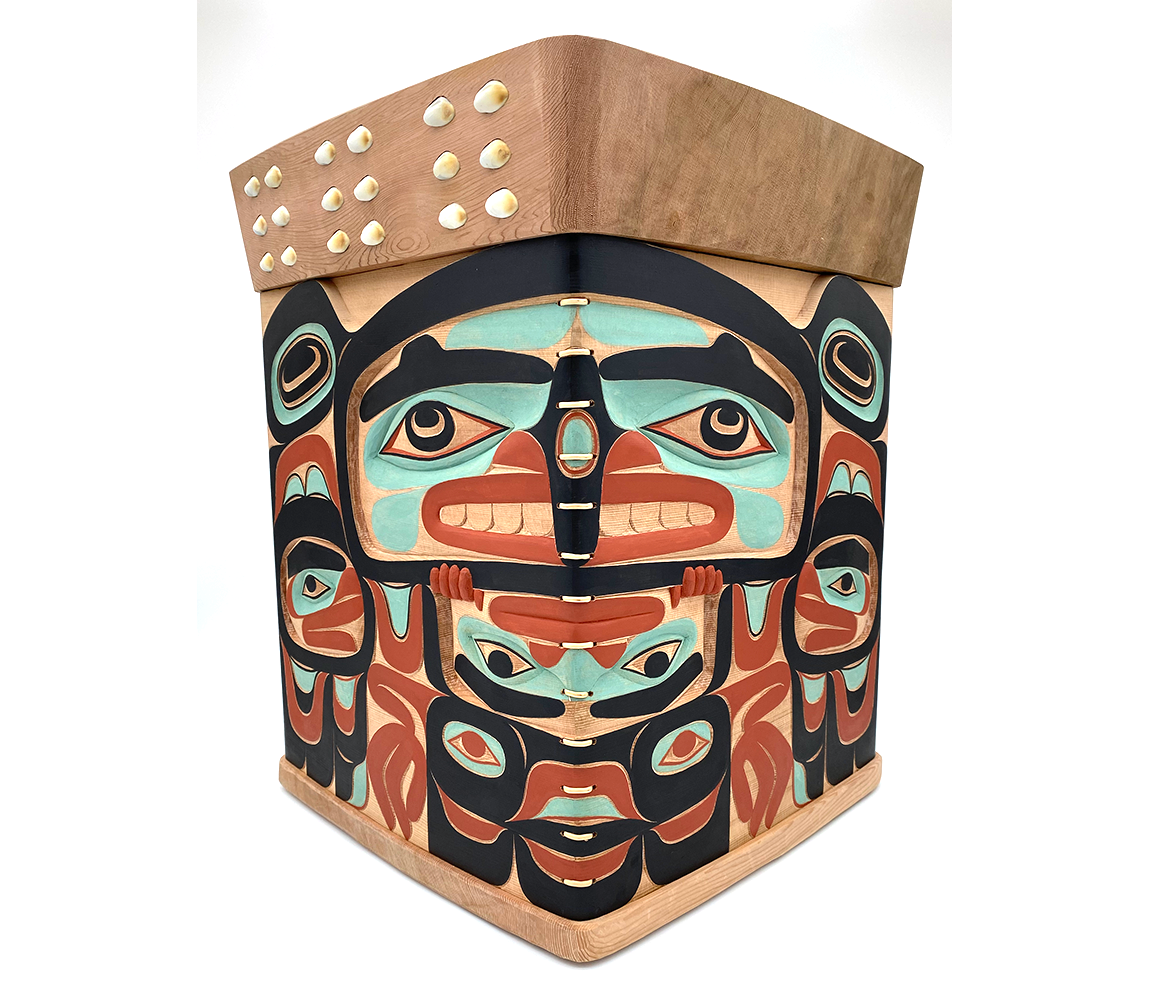
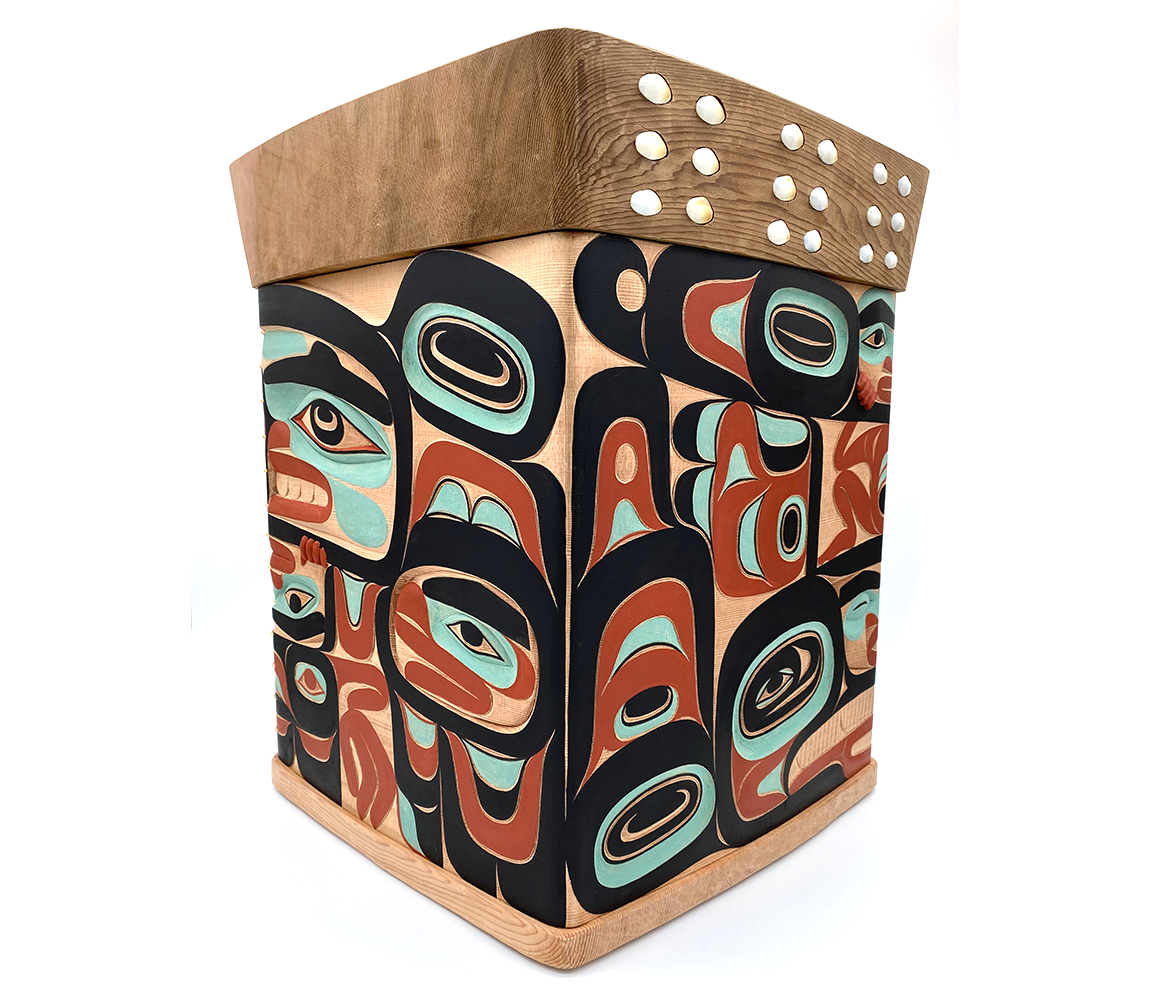
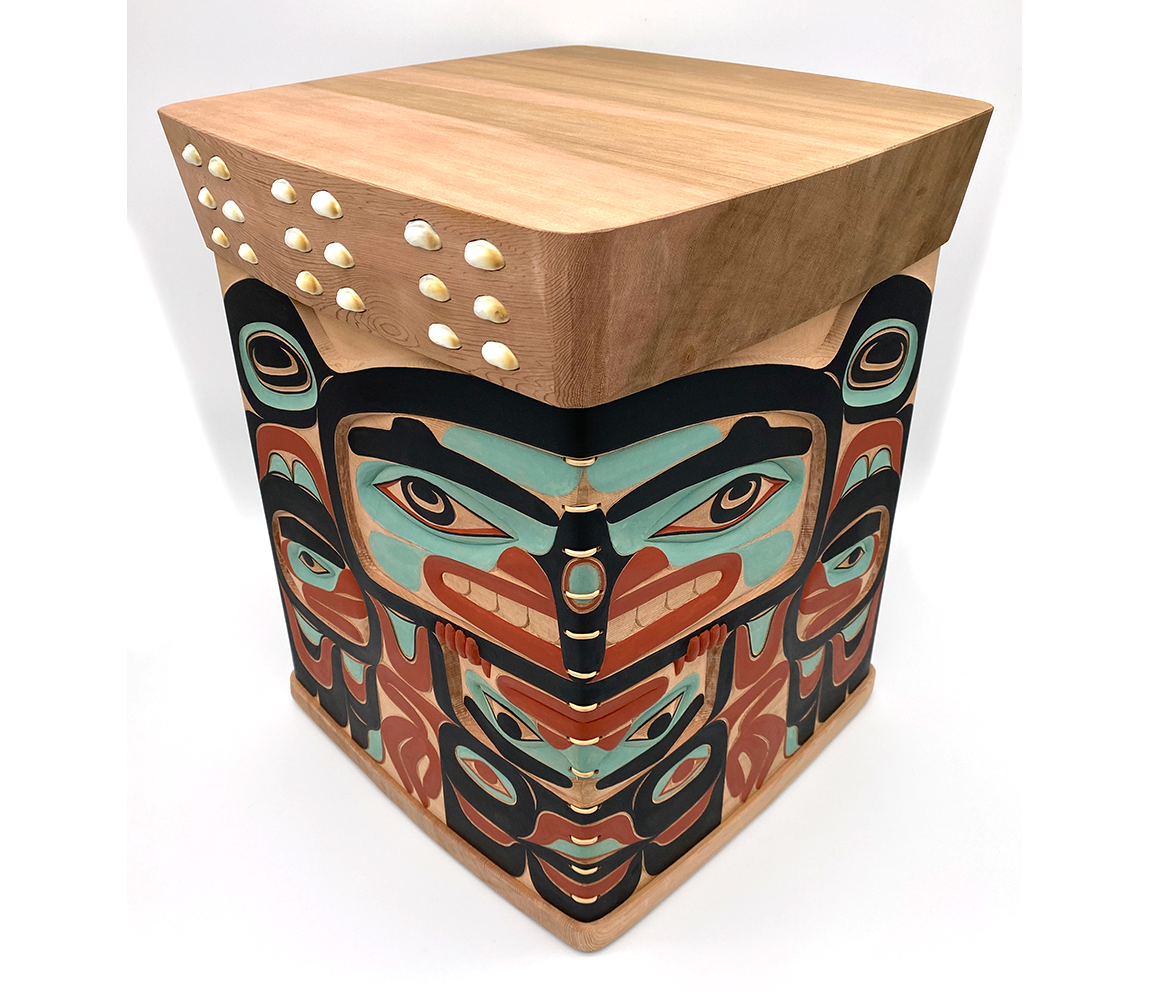
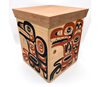
Humpback Whale Escapes Thunderbird
Western Redceder, Acrylic, Celadonite
~15" x ~15" x ~18.25" H
$6950
- Bentwood Boxes are carved from one sheet of cedar, bent at each corner and stitched together with cedar roots
- Cedar naturally repells insects and acts a exceptionally functional storage box
-
This box illustrates a thunderbird and humpback whale. Thunderbirds on the Northwest Coast are said to hunt whales like eagles hunt salmon. This pair is my favorite subject for illustration because each has so many characteristics that can be incorporated into a design.
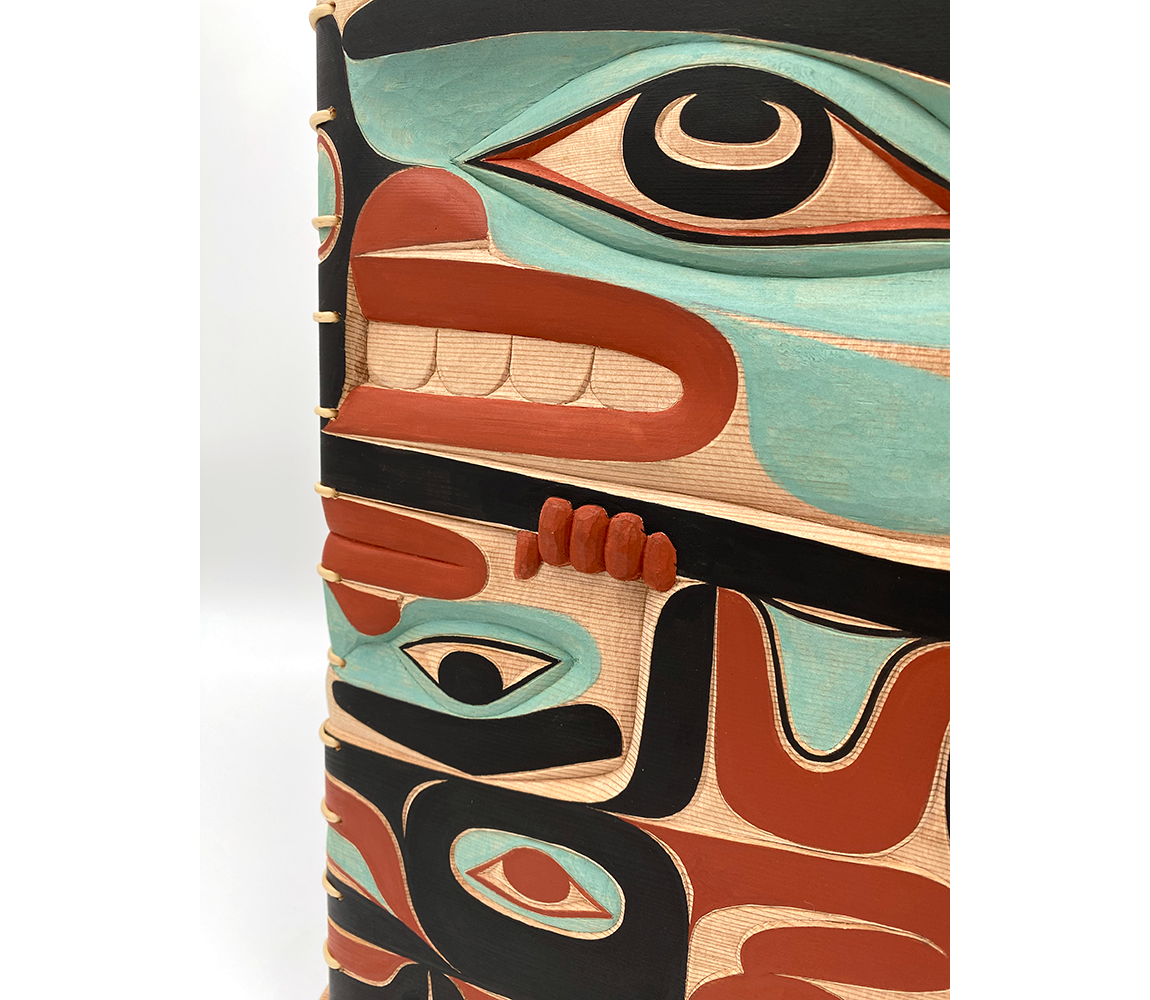
This whale is diving escape the thunderbird. Thus, its tail in uppermost. The baleen is represented by grooved “teeth”, and the whale species is identified as a humpback because of the extra-long pectoral flippers at either side of the whale. The face between the whale’s eyes represents the blowhole, hence the expression.
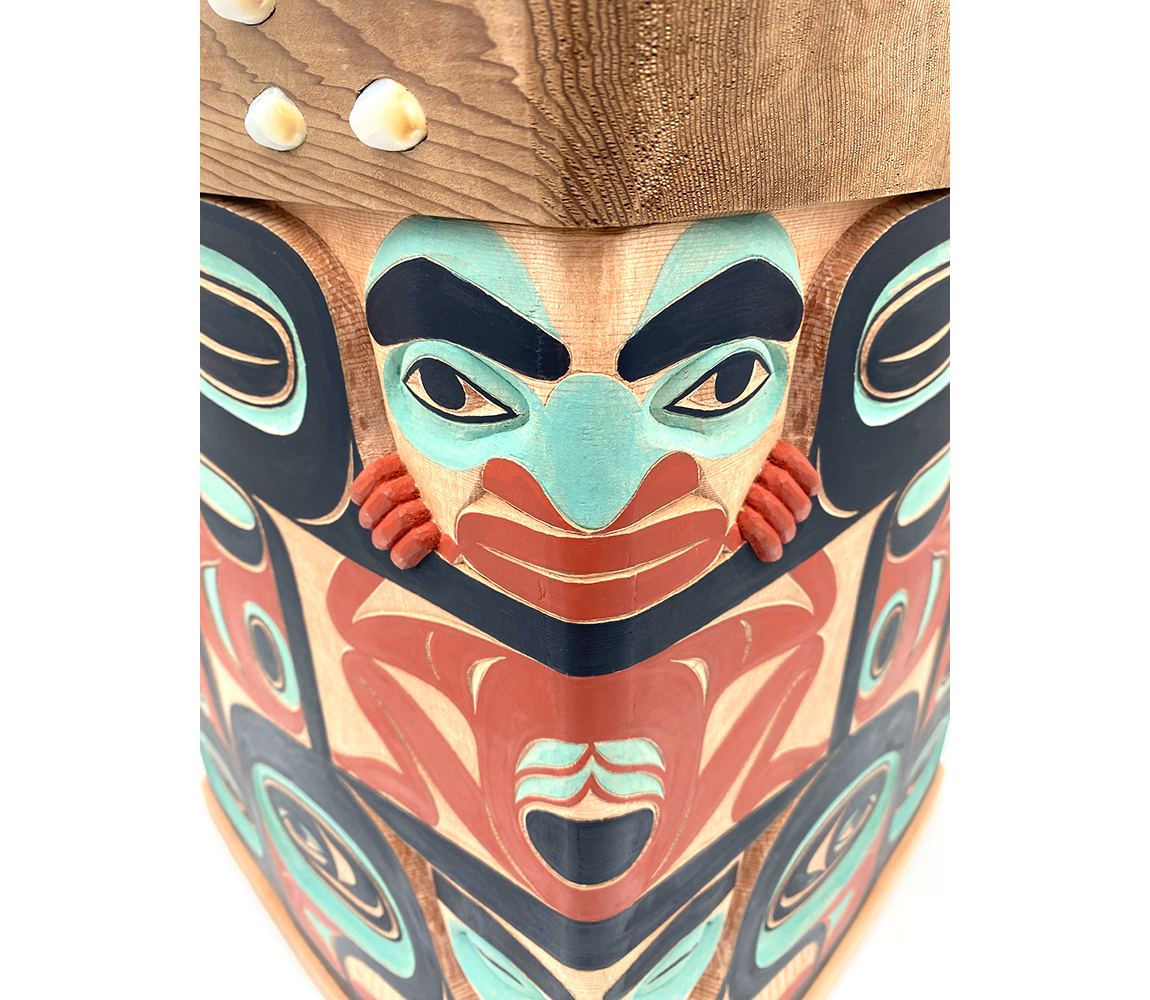
The thunderbird is a bit more straightforward (I think) with a curved-down beak in the center, wings spread on either side, dangling legs in red, and a tail of ovoids and U-forms in the lower center.
Normally I would consider the bird as the dominant figure, so many of the boxes I’ve made are titled “Thunderbird and Killer Whale”. But in this case I wanted to accentuate sculpture on the bird side. This entailed deeper cuts for the lips and foreheads of the faces represented, which would have been impossible across a thin bent corner, so I put them over the thicker joined corner. Since, by tradition, the joined corner is always the “back” of the box, this box is titled with the whale first. Having made a number of boxes with similar format, this time I tried to do something different. This box has one huge ovoid for the bird’s head, with a sculptural “stylized face” inside. This is a somewhat unusual traditional design. Though I have made perhaps more than 125 boxes, I have never done this before. Similarly, the shoulder-joint ovoids also have stylized faces (which look like meerkats to me). Another thing I have never done before. I am a modern traditional artist, and much of what I do comes from Duane Pasco or Bill Holm. But it is possible to be “trapped” by one’s tradition, however good. All my boxes have angled, tapered bases, or more rarely, bases that are sanded flush to the sides. But looking at a book of old box photos, I saw many with un-tapered bases. So here it is. Not much of a change, but for me it’s radical!
Formline designs like these were traded around in traditional times, and were similar enough that trying for a tribal attribution is difficult, so most are just called “Northern”, that is to say Tlingit, Haida or Tsimshian. Sculpture from this region is easier to differentiate. Tlingit sculpture often has the cheekbone dropped down enough that it flows right into the lips. My style is influenced by this style. In a few of the most eloquent old masks, the upper inside of the eye socket is hollowed, but the outside has a bulge – a naturalistic feature illustrating the browbone. It seems obvious to incorporate this subtlety into box faces, but I have never seen it done by anyone else, hence, it is something of a signature of mine. Similarly, ancient boxes were joined using spruce root, but in more modern boxes (say, 1860 and after) box corners were pegged. I like the look of the lacing, but I’m not aware of any modern artist who uses it.
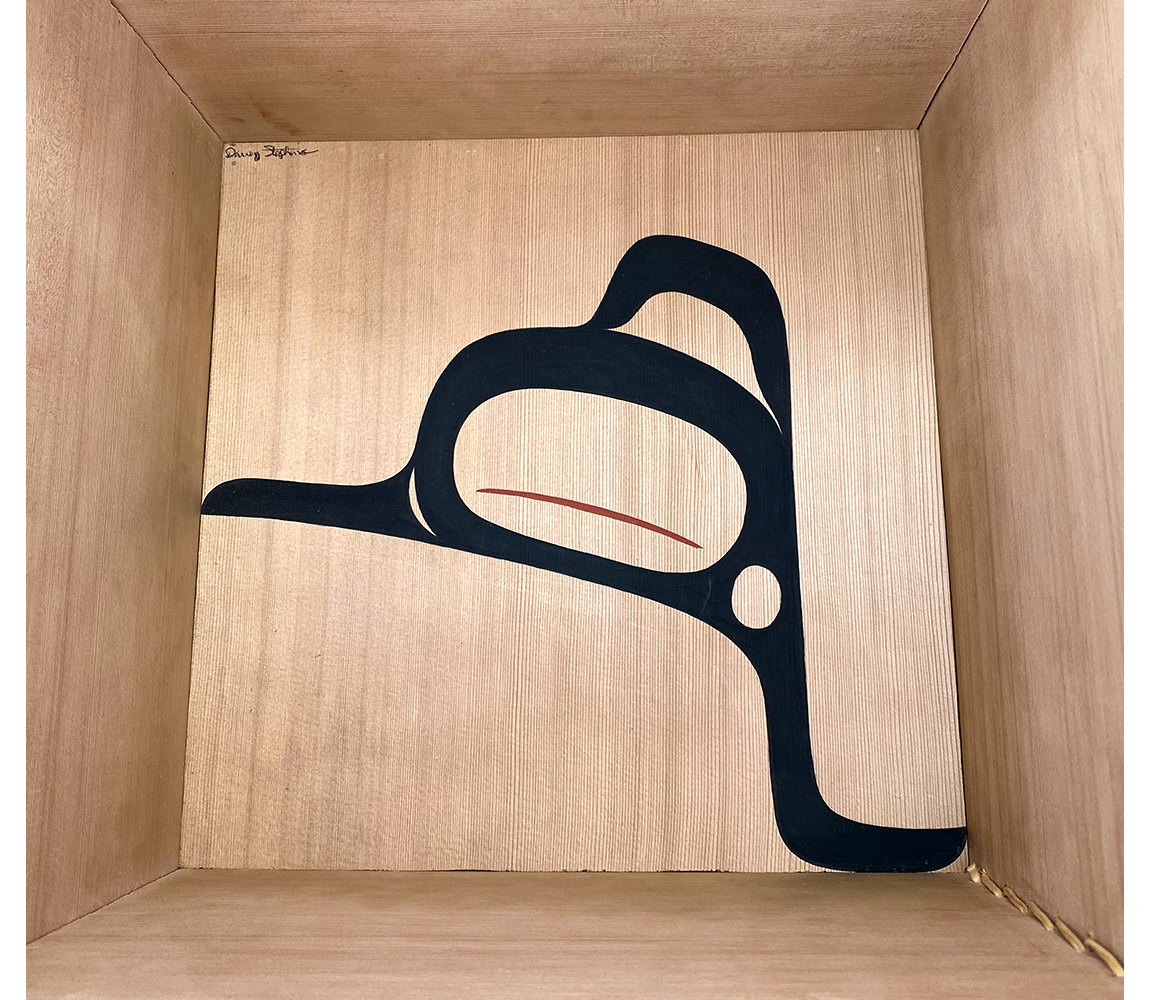
Sculptural features in boxes a speciality of mine, since I usually start with a thicker plank, carve it into four bulging panels and then bend it into a slightly bulging box. (Once again, something of a signature.) The thicker wood allows for more sculpture. With two sculptural faces on the whale side, one on the bird side, plus sculpted ovoid faces and the sculpted central face, all with deeply sculpted “normal” ovoids, and also the gripping hands, this is the most sculptural box I have ever made. It was fun to make! The box is made entirely out of western redcedar (the sides and base are made from the same board). The red and black are modern acrylic paint, though the blue-green is made in part out of the old time celadonite, which I found in a Victorian pigment shop near the British Museum. The box should need no particular care.
David Stephens

Sign up to receive an email when we get new work from David Stephens